

SERVING MARYLAND & WASHINGTON, D.C. AREA
Affirming Therapy for
High-Masking & Late-Diagnosed NeurodivergencE


“Why is life so much harder for me?”
You feel deeply. You are bright, empathetic, and creative.
You are passionate, and at times you can be extremely motivated for connection, work, and creative pursuits.
That’s why for so long, your neurodivergence went undetected. You were able to get by, maybe even build a list of accomplishments, and form meaningful relationships.
But over time, perhaps precipitated by a big life change, being differently-wired has caught up with you.
Despite your giftedness, life has felt harder than it seems to for others.
Around others, you can get disconnected from your own needs and sense of self and feel drained afterward.
It’s hard to establish a balance between being with others and the solitude you need.
Whether partnered or not, you can feel lonely and crave connection.

Sometimes you’ve been called brilliant. Other times you don’t know what you're doing.
You’ve lost time due to inertia, procrastination, and blocks around planning.
While ardently curious and inspired when you feel strongly about something, you often get stuck or paralyzed. You’re aware of all the complexities and details and don’t know where or how to start.
As if these difficulties weren’t hard enough, another layer gets added on—the shame of your life not unfolding like “normal” people’s. The feeling, despite all your strengths, of being inadequate.
Feeling different, exhaustion, and loneliness evolve into a deeper question of how to be here, in the world, in relationships, in a body that feels both too attuned to the world and not enough.
So, you cope the best way you know how. Dive into your special interests. Accumulate more knowledge and learning. Escape into books, shows, food, video games, or doomscrolling, or turn to substances.


Yet it rarely stops the questions from circulating:
How do I find peace and belonging?
How do I navigate this world with a tender heart and a complex mind?
How do I learn to trust myself when motivation and energy feel out of my control?
You've tried almost everything, but it hasn't seemed to work. You’re trying to solve a mismatch between your neurobiology and environment. You’ve tried strategies and therapy designed for neurotypicals but then have been left feeling disappointed or misunderstood.
You need a different kind of support.

Neuroaffirming therapy takes another approach.
Instead of trying to change you, we first understand your inner world: how your nervous system, emotions, and patterns of thinking work together. From there, we’ll explore what it’s like for you to be human in this body in a world not designed for you.
You can show up as multi-faceted and messy as you are.
We’ll bring curiosity to your fears, desires, hopes, dreams, depths, and creative forces.
As you better understand your brain, you’ll learn to manage your energy and relationships to create a life that feels sustainable and meaningful.
And perhaps most importantly, you’ll begin to accept the whole picture of who you are—the “spikiness” of your nervous system, and your inherent beauty and worth.
How Neuroaffirming Therapy Can Help:
-
Self-Understanding & Identity
What I love most about neurodivergent minds is their uniqueness from one another. We are such a wide, varied group of brains. At the same time, we possess distinct neural patterns, and learning these can aid our self-understanding.
With compassion, we will use both bottom-up (nervous system-based inquiry) and top-down (intellectual curiosity) approaches to tell your story in all its complexity. We’ll weave together an understanding of your brain, sensory needs, and emotions to map your patterns, struggles, and strengths.
Along the way, we’ll start putting language to feelings, needs, and experiences that you previously struggled to name. You’ll stop feeling “weird” or “less-than” and create an accurate view of yourself as a gifted, at times challenged, and courageous person who has trudged and excelled, rested and gritted, and rebounded and climbed their way through the process of living this life.

-
Past Experience & Meaning
To learn late in life that you’re neurodivergent may feel like you’re seeing a blurry photo come into focus. You may experience diagnosis as a lightning bolt of relief and recognition or as a slow process of questioning and integrating. You may gain clarity on how long you’ve flexed yourself to fit in and please others. Anger and grief may surface as you realize the impact of unmet needs, or long for a repair that isn't possible.
Having a neuroaffirming therapist alongside you during this process can provide guidance and containment. We will make meaning of your past through the lens of your neurodivergence. You’ll cultivate compassion for your past self while making space for your current self to appreciate who they are, feel empowered, and be free.

-
Daily Coping & Sensory Needs
You may experience overwhelm and anxiety because of sensory sensitivities, masking, and the stress of living in a world not built for you. When these experiences are so often misunderstood by others, that can lead to shame and rumination. And sometimes, the way your brain is attuned to small details, pattern-seeking, and gathering information can lead to obsessive thoughts and compulsions (OCD).
In therapy, we will peel apart the factors, one by one, that load up your nervous system. You’ll build neuroaffirming tools to ground your nervous system, regulate your emotions, and cope with unproductive thought patterns. We may also help you increase your interoception (sense your body’s internal signals) by learning to pay attention to your physical and emotional patterns, rhythms, and needs.

-
Connection & Solitude
How we experience connection, love, community, and solitude is integral to our well-being. As a neurodivergent person, you can face a variety of challenges with relationships. Like anyone, you desire connection. But you also often need space and time to recover after being social. Additionally, you don’t feel comfortable around everyone and can feel overwhelmed at social gatherings like family events or work meetings. Even with our closest relationships, we can lose a sense of ourselves and our own needs.
While solitude can be a refuge, you might also experience loneliness. It can be challenging to find the right balance between being with people and being alone.
In therapy, we’ll explore what your relationships are like now and what your ideal relationships might look like. We’ll work to improve your ability to give and receive care in meaningful ways. We’ll help you build internal and external skills to navigate the tension between alone time and intimacy with others.

-
Special Interests & Joy
Engaging in special interests may be where you first experienced a sense of vitality, peace, connection, or the feeling that everything finally made sense.
As your responsibilities grew, these activities may have been pushed aside as "unproductive," “selfish,” or “just a hobby” when they actually were essential to your well-being. We’ll identify and make space for what captivates you, ensuring it remains protected and prioritized in your life.
Going to the harder, more fragile places in therapy is bolstered when we also weave in your special interests—the areas of your life in which you have expertise, passion, and commitment. And, sharing your special interest(s) during a session gives me a chance to see you in your place of joy, and helps you feel that an essential piece of you is seen.

-
Creativity & Flow
For neurodivergent teens and adults, creative work can be a place to process and make meaning of your complex experience of the world—a space to work with the intensity and beauty that you take in. But for many, while you may have experienced both solace and flow in the creative process, you may have also faced resistance, times when getting to your creative work has been like pulling teeth.
In therapy, we can assist you in riding the waves of resistance. We can help you connect with your creative energy, which is likely rich but may have protections around it, and support its opening. We can use your creative work as a pathway to understand you or as a modality to process your experiences. We can integrate your dreams into therapy (the dreammaker is a close cousin to our creative life).
If you’d like to integrate creative elements into your therapy, such as writing, drawing, or mindfulness exercises, please let me know during consultation or at any point of our work together. If you’d like to integrate creative writing into group therapy, please see my group for late-diagnosed neurodivergent adults.

Meet Melanie Eisner, LCSW
Therapist for High-Masking &
Late-Diagnosed Neurodivergents
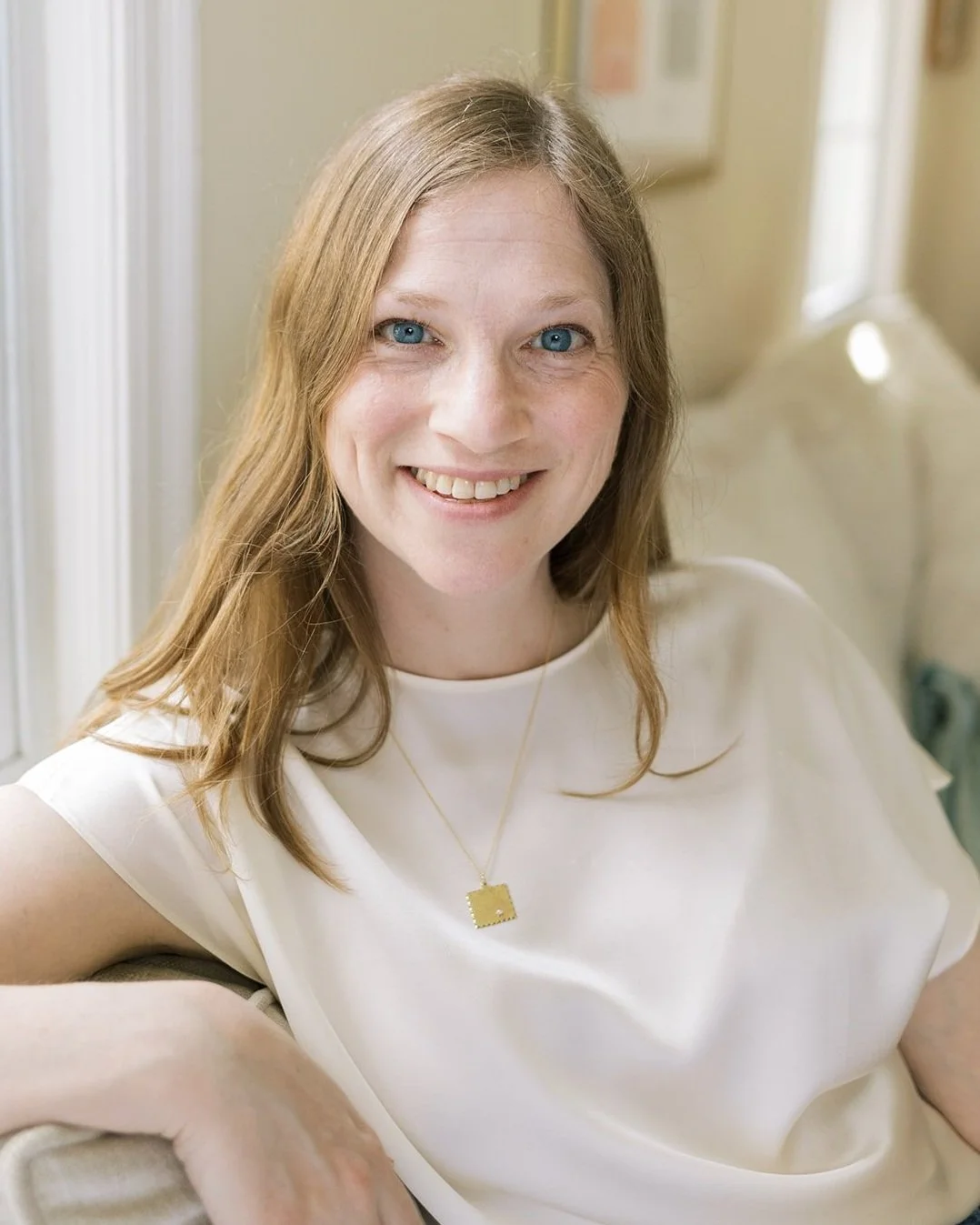
I spent much of my life not understanding the connection between how my brain and nervous system worked and my struggle with shame, self-confidence, and perfectionism.
Everything shifted when I learned about being a Highly Sensitive Person, as I started my private practice in my 30s. It was a framework that described my sensory sensitivity, depth of thought and feeling, and high empathy. It released me from believing something was wrong with me.
But then, everything shifted again when I became a mom.
In navigating both postpartum and perimenopause, old feelings of inadequacy resurfaced as I faced struggles with emotion regulation, executive functioning, and limited energy. Through this experience, and a parallel process of many of my clients learning about their Autism, AuDhd, and ADHD, I discovered my own neurodivergence.
Becoming a mom when you’re neurodivergent is nothing if not a way to take apart the world as you knew it and bring you back to your most elemental self—soft in your sensitive nervous system, vulnerable as a turtle without a shell. Learning about my neurodivergence allowed me to move from wondering why I was different and become curious about how I was different.
I was able to start dismantling internalized ableism and accept more parts of myself. I then directed my attention to what I needed to thrive as a partner, parent, and business owner in a world that wasn’t designed for me. I rebuilt my turtle shell from a place of knowing myself and my brain more completely.
Now I’m passionate about helping teens and adults who are discovering their neurodivergence to do the same. I want to help you experience greater self-understanding and self-worth, feel more understood, cultivate your creativity, and build a life that supports who you truly are.
ARE we THE RIGHT FIT?
Neurodiversity rarely fits into neat checklists, and neither do the people I support. However, this list might help you get a sense of whether we might work well together. It’s not exhaustive or absolute. So if you’re unsure, please schedule a consultation so we can discuss together.
You've spent much of your life feeling different, misunderstood, or like an outsider.
You're a late-identified or questioning neurodivergent teen or adult (ADHD, AuDHD, autism, HSP, or other neurotype) seeking a deeper understanding of yourself.
You're experiencing burnout or a major life transition (parenthood, perimenopause, career changes, relationship shifts) that has disrupted your usual coping strategies.
You long for more honest, connected relationships but also need significant time alone to recharge.
At times you express your emotions articulately, incisively, even artfully. Other times words are elusive. Either way, your emotions can feel intense, and you want to feel less overwhelmed and more capable when they surface.
You respond to stress and overwhelm with distraction (scrolling, substances, gaming, food, or similar), and you want more choice in how you care for yourself.
how to get started
01.
Free phone consult
We’ll have a 15-minute conversation to talk about any struggles you’re facing and see if I’m the right therapist to support your needs and goals.
02.
complete paperwork
You’ll complete paperwork through a secure client portal where I’ll share details about my practice and gather more information about your history and therapy needs.
03.
intake session
In the first 1-2 sessions, we’ll go deeper into your current struggles, clarify how you want to feel and what you want your life to look like, and create therapy goals to guide our journey forward.
FAQ
-
Many of my clients come in with this question because while some of the descriptors match their experience, they may not fully identify with the term. Neurodiversity is a large umbrella of different experiences, and the concept continues to expand as we learn more about what it includes. Therapy offers us a space to explore without having to come up with an answer right away. We can proceed with deep, quality work without settling on a formal diagnosis or fitting you into any boxes.
-
Each therapy session is $260 for 50 minutes. Credit cards, Zelle, and HSA/FSA cards are accepted. I am considered an out-of-network provider. I will provide you with a superbill after every appointment, which contains all the information your insurance company needs to reimburse you. To find out your out-of-network benefits for psychotherapy, contact your insurance company.
-
I meet clients weekly for at least a year, though we may adjust this depending on your needs and progress. Most of my clients start to feel a greater sense of understanding within a couple of sessions, but often the deeper changes require a longer commitment. As a psychodynamic, relational therapist, I don’t see longer-term therapy as an indicator of your pathology. It’s a measure of your commitment to self-understanding and healing. Neurodivergence impacts us differently throughout our lifetime, so you may find that as you make progress in one area, it creates space for deeper work in another.
-
Yes, and for a multitude of reasons. For one, it’s never too late to be curious about your brain, your inner world, your experience, and how you might shift these internal narratives towards more acceptance, self-understanding, and peace. Even if you’re late-identified, there are still opportunities to experience healing, reaching back to support the younger parts of yourself who had to mask, felt misunderstood, and felt alone and inadequate.
Accommodations (self-created or from your environment) can be helpful at any age, and the process of learning how to provide yourself with them is a skill you’ll need, as neurodivergence can shift and change over your lifespan.
Additionally, the length of time you’ve been masking may be proportionate to the fear or uncertainty you feel about unmasking. Support from a neuroaffirming provider can guide you in pacing this process and in building the tools and skills needed to create a life that feels sustainable for your sensitive nervous system.
-
No. Some of my clients come with a formal diagnosis, some are self-diagnosed or questioning, and others are just beginning to explore if neurodivergence is part of their experience. I can support you at any of these stages and beyond. Some of my clients come to work with me after a formal assessment to help integrate this new knowledge into their relationships and daily lives.
-
Yes. Being in the world as neurodivergent (especially without knowing you are for a while) can have profound effects on your social and romantic relationships. You may carry attachment trauma or pain from past relationships that impact how you relate to people today. We will work together to heal those attachment wounds and the negative stories about you that may accompany them. This will help you start to see yourself as capable of forming deep and meaningful relationships, while better advocating for your needs and creating more authentic connections.
You deserve a place to explore the challenges and joys of your neurodivergence.
You can take steps to know in your bones that you are not flawed.
It’s that the mismatch between your nervous system and our society has worn away at your sense of self-worth, and at your soul (your core being softer, a bit more tender).
You can learn to embrace your differently-wired self, armor yourself with a turtle shell, and be received as you are.
You can begin to accept your whole self: your beauty and brilliance, your struggles and pain, your big heart and desire to love.
You can arrive home to yourself.