

The Doorway
a 12-week writing & process group for
post-diagnosis neurodivergent adults
Next Cohort Starts: Fall 2026


Make sense of your diagnosis and find connection
in a creative, neurodiversity-affirming space
You’re incredibly bright, accomplished, creative, and full of empathy, yet you walked through life for a long time without knowing why you felt different.
Because you blended in so well, no one knew just how misunderstood you often felt. When relationships changed or ended, you experienced loneliness, grief, and on top of that, felt not good enough, like it was somehow your fault.
Additionally, in transitions – times of change and high stress – your typical coping tools and compensations seemed to fall by the wayside. The ground underneath you and your identity felt shaky.
Now finally, like a key unlocking a door that has long been closed, getting diagnosed late in your life has allowed you to understand the unevenness you’ve experienced: your gifts side by side with your burdens; your desire to connect side by side with your need for alone time.

Now you know why life seems so much harder, why you’ve never felt enough, and why relationships have at times been a struggle: You’re neurodivergent.
And that means you’re not bad at your core, there’s a very clear and explicit explanation as to why you’ve struggled through the years. And yet while you feel relief to know that you're neurodivergent, your diagnosis* – whether ADHD, Autism, or AuDHD – has left you with more questions than answers. (Questions only you can truly answer).
Now, post-diagnosis (or in the process of self-diagnosis*) you wonder:
HOW do I understand my past through this new lens?
HOW do I come to terms with my limitations, and still feel my value and wholeness?
WHO am I underneath the ways I’ve blended in and compensated?

You’re ready to integrate your dx, but none
of the options feel like they cover everything…
-
Going Solo feels lonely (and you've already tried it!)
You could do it alone, and you’ve probably already tried that. But it’s hard to trust what’s on the internet, and hard to process in an empty chamber.
-
Individual Therapy doesn't feel like enough
Individual therapy focuses on internal work, not shared experiences. Your therapist can be a sympathetic witness, but they aren’t going through changes alongside you.
-
Social Media feels too crowded, yet lonely
You’ve tried facebook groups, or social media – but the unmoderated, unstructured nature of these options offers only fleeting insights and connection.

What if there’s an option created precisely for your experience?
What if there was a space where you undergo this shift in identity and narrative alongside other newly-diagnosed neurodivergent adults navigating this messy middle?
And what if this group allowed you to get the attention you need, where you could take up space without feeling like a burden, where your contribution was adding to the collective healing of the group?


Introducing ‘The Doorway’
A writing and process group for newly diagnosed neurodivergent adults that helps you come home to yourself.
Over the course of 12 weeks, you'll gather with 6-8 newly diagnosed neurodivergent adults who are at the threshold.
Bright, insightful people like you, who no longer want to live with false stories about not being enough or being too much. People ready to enter a space for healing, gaining tools, and connecting.
is ‘the doorway’ the right group for you?
You're a late-identified or neurodivergent adult (ADHD, AuDHD, Autism) seeking a space to integrate your diagnosis into your life.
You've spent much of your life feeling like an outsider, and your diagnosis was the first thing that made sense.
Part of your neurodivergence is juggling the tension between longing for connection and a need for solitude and time to recharge.
Burnout or a major life transition (parenthood, perimenopause, career changes, or relationship shifts) was a catalyst to explore diagnosis.
You’re curious about your inner world. You love learning, exploring, and growing as a person.
After a lifetime feeling different and misunderstood, you’re seeking a space to connect with kindred spirits.
Not sure? You can reach out … I won’t leave you guessing – we can explore if it’s a fit!
Open the Doorway to…
-

Self-Understanding
Make sense of your lifelong experience and your new diagnosis. Explore thoughts and feelings in depth.
-

A RoadMap
Get clarity and direction on how to integrate your diagnosis. Get support in creating a path aligned with your needs.
-

Community
Form relationships with a diverse array of neurodivergent group members. Experience a sense of belonging amidst people who understand you.
-

Reframing your Experience
Reframe past shames by identifying toxic systems that impact your sense of self. Recontextualize your limitations and build self-compassion.
-

Burnout Recovery & Prevention
Move through burnout by receiving support and ideas for self-care. Use this work to restore energy and motivation.
-
Tools & Accomodations
Learn how to manage sensory and emotional overwhelm. Learn how to ask for work and life accommodations so that you can sustain your energy.
-
Creativity
Sink your teeth into creative work and experience flow. See how writing can facilitate new ways to understand your mind and a platform to retell your story.
-

Joy & Aliveness
Increase your energy, confidence, and joy as you understand and overcome past pain in a safe space
-
Connection
Receive empathy and the experience of being deeply listened to. You’ll feel seen, heard, less alone, and invigorated by the positives of your neurodivergence.
WHEN WRITING IS MEDICINE
How this group was born
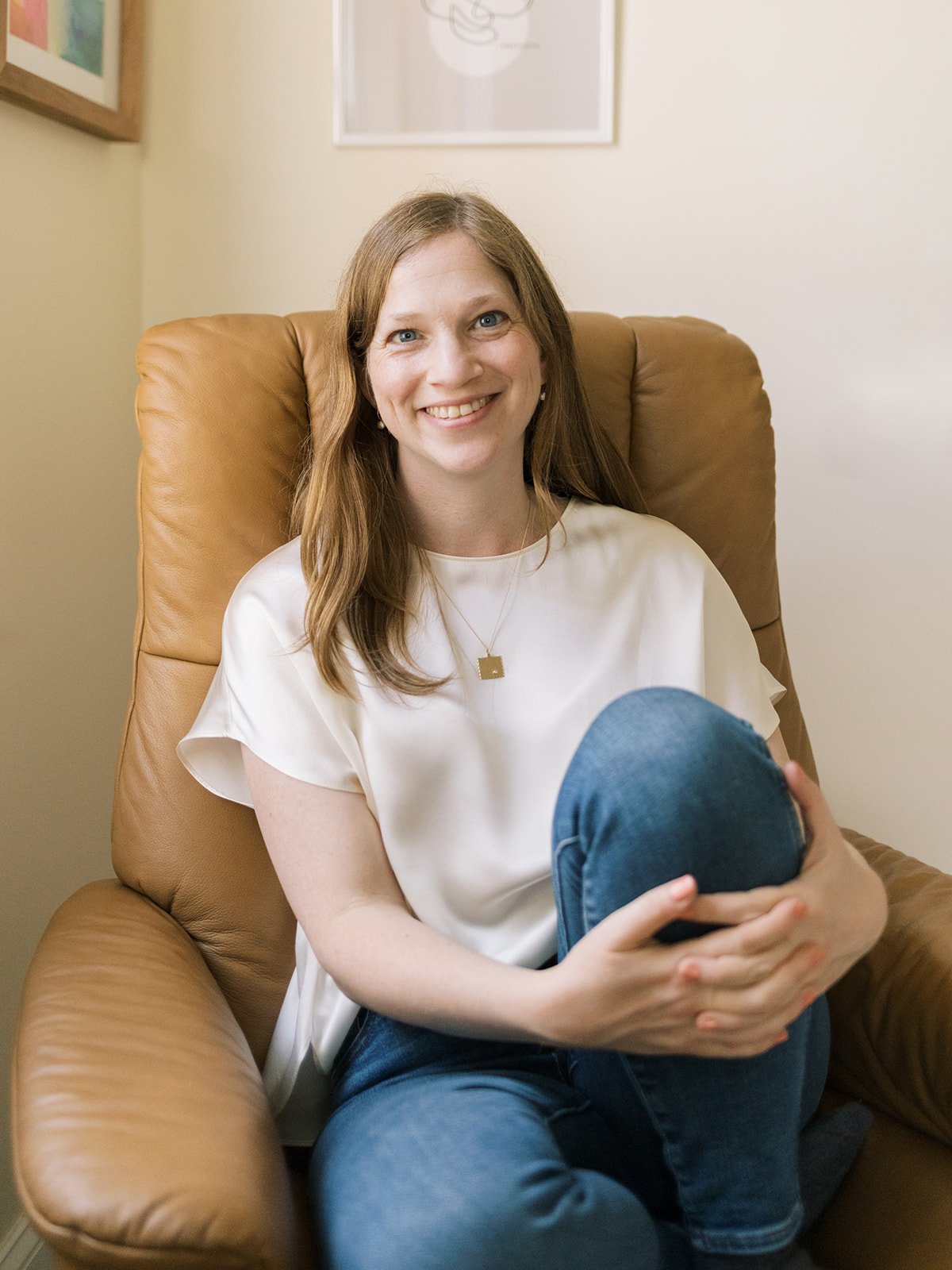
Meet Your Facilitator, Melanie Eisner - Therapist, neurodivergent adult, and creative writer
As a longtime creative writer, I believe in the healing powers of the pen. Writing offers a space where you can dream, imagine, remember, rage, or weep. You can enter terrain just outside of our awareness, and allow what seeks to become known to emerge on the page.
Intense, many-layered neurodivergent minds take in so much from the world, which overloads our systems. Writing helps you metabolize – to transform what is overwhelming into something you can speak about and hold in your hand. And you don’t have to be an experienced writer to get these benefits.
As a therapist for 15 years, I know that speaking about our pain, our stories, and our paths forward, and having our words be witnessed in the presence of caring relationships, facilitates healing and self-trust.
This group brings forth what I know to be the most transformative for neurodivergent adults: a space where you feel seen, and where you understand you are not alone in what you carry. An accepting, open space to be exactly who you are. A space for deep reflection, creativity, emotional intimacy, and community.
What we’ll do each week
Here is a list of the themes that will anchor us. These are open to adaptations based on the composition and needs of the group.
-
Week 1
A Landing Space
We’ll take stock of where you are now, post-diagnosis. What has been circling through your mind? What has been circling through your world?
-
Week 2
Relief
Getting diagnosed feels deeply validating. You now know, truly, you are not defective at your core, you’re just wired differently.
-
Week 3
Identity
We’ll explore who you are now. You get to tell your story by looking at your past through this new lens.
-
Week 4
Masking
Where does masking drain your energy or block your fullest expression? Where and when can you choose to stop masking?
-
Week 5
Overwhelm
We’ll reflect on your sensory preferences and needs, what tools works for you, and explore other modes to navigate sensory experiences and regulate emotions.
-
Week 6
Executive Functioning
Learn how to work with your particular nervous system and brain, deshame your executive functioning struggles, and generate ideas in addressing them.
-
Week 7
Connection
We’ll use the group as a laboratory and explore connecting in a safe space where we can process in the moment how we each respond and take in one another.
-
Week 8
Supports
The group is a place to discuss self-accommodations, formal accommodations, gather resources, and think about where and how you can add support to your life.
-
Week 9
Sharing your Diagnosis
We’ll explore how you tell your loved ones about your diagnosis, how to process what comes up when you do, and how knowing your DX changes your relationships.
-
Week 10
Friendship & Belonging
We will discuss finding community, and how knowing yourself more accurately can be helpful in finding your people.
-
Week 11
Grief
Alongside relief, you may also feel sad for your younger self. You may experience anger and disappointment that loved ones failed to understand or tend to your needs.
-
Week 12
Looking Ahead
What are your dreams and desires? What do you want for your future? What do you want to take with you from this group?

integrating your diagnosis:
what makes ‘the doorway’ different
-
This group is specifically for late-diagnosed neurodivergent folks figuring out how to use their diagnosis to heal and reconfigure their lives in healthier ways.
This group centers both emotional healing as well as practical steps forward as a newly diagnosed person learning to navigate your nervous system.
This group combines creative writing and group discussion, to find multiple entry points into your emotional process.
The combination of writing and discussion offer periods of solo reflection and group connection – both which are needed for neurodivergent humans.
-
The Doorway was created to fill a gap in care for neurodivergent adults – who don’t want to do it alone, who need community beyond individual therapy, and need a safe, small, structure not found on social media.
One of the strongest, most affirming resources that we have are others in the neurodivergent community. Our community is wide ranging, highly idiosyncratic, and special.
What makes this program unique is that it’s a committed 12-week container with the same people, and it's intentionally structured to provide deeper transformation. The group format lends itself to major aspects of healing: de-shaming, self-compassion, and self-acceptance.
If you find there is deeper work you would like to do together, individual therapy is also available.
-
Creativity, and creative writing in particular, is well suited for neurodivergent minds trying to heal and make sense of their place in the world.
Curiosity is the seed of creativity, and no one is more curious than neurodivergent folks. Furthermore, writing is a place to come to when you’re overwhelmed with input, stimuli, and emotions. Writing can help reveal the permutations and interconnections your brain sees, and at the same time tease apart the threads.
Creative writing can help you strengthen your inner resources, learn who you are by seeing what shows up on the page, and reflect the beauty of who you are. Writing can help you tap into raw sensory data from your body, emotions, and memories. Writing offers a chance to connect to your inner child, and a place to weave threads of your intellect together with your unconscious.
Writing, like meditation, or therapy, is a form of witnessing the self, witnessing one's own mind, its intricate inner workings, and witnessing the different versions of the stories we have told ourselves. We can clear pieces of the past that no longer serve us and replace them with more accurate stories.
Putting your words on paper produces a transformative effect. What were free floating thoughts – the jumble which may have felt heavy – now have a place to live outside of you. Seeing what once resided only in your body gives you more freedom over those thoughts and feelings. Your narrative becomes pliable, with the capacity to shift and grow. You're left with release, breath, form, clarity.

why is this group called ‘The Doorway’?
The Doorway is a symbol for leaving and entering. There’s no commencement ceremony to mark the moment when you learn you’re neurodivergent. But there is a transition. There is a [way of living] you’re saying goodbye to, and another you’re walking toward.
That’s why I’ve created this doorway, as a practical and symbolic ritual of crossing the threshold that represents this significant shift in your life.
We’ll travel…
From: A place of not understanding your uniqueness and your spiky combination of brilliance and faltering, beauty and pain. A place with false stories in which you blame yourself for so many things.
To: Treading these waters together as a group. Becoming more effective in navigating your world and stepping toward knowing and loving yourself at a deeper level.
‘The Doorway’ Details
-
Timing
Fridays at 9:30AM ET
Starting October xxx 2026
-
Format
Group Therapy (6-8 people)
Meeting on Zoom
-
Cost
$XX per group
A superbill can be submitted to your insurance and for reimbursement

FAQ
-
For High-Masking, or Late-Dianosed Neurotypes
Missed presentations of neurodivergence, including high-masking individuals, women and non-binary people, AuDHD profiles, sensory differences, and twice-exceptional (2e) or gifted individuals.
-
Opening: Each week we’ll have a theme to anchor us. We’ll write to a prompt (or go off-prompt!) related to the theme. You can write with a pen and paper, or on your laptop. We’ll write for 15 minutes, give or take, depending on flow.
Middle: Our discussion will spring from what arises for each of us during the prompt. You may choose to share pieces from your writing but you are not required to. We’ll talk for about 45 minutes, speaking organically (i.e. there won’t be a specific order, you won’t wait for a turn). Each person is encouraged to both participate in the discussion and to listen to others with presence. If you're in a quieter, reflective, or introspective mood, you won't be asked to share beyond your comfort.
Close: We’ll close out with a reflection or prompt after the discussion and write for 10 minutes. This is a place for you to process and integrate the energy and intensity that took place that day, and contain it before you return to the world.
-
You do not have to be a writer or creator. This group is not about “good” writing. It’s about the process. I’ll simply ask you to pick up a pen and be curious. This is about exploring your feelings, thoughts, and experiences. Writing allows us to access parts of ourselves in new ways.Accommodations (self-created or from your environment) can be helpful at any age, and the process of learning how to provide yourself with them is a skill you’ll need, as neurodivergence can shift and change over your lifespan.
Additionally, the length of time you’ve been masking may be proportionate to the fear or uncertainty you feel about unmasking. Support from a neuroaffirming provider can guide you in pacing this process and in building the tools and skills needed to create a life that feels sustainable for your sensitive nervous system.
-
This group is a safe, open space that welcomes both formally diagnosed and self-diagnosed Autistic, ADHD, or AuDHD individuals.
Self-diagnosis is the thoroughly researched conclusion that you meet the criteria for autism, ADHD, or AuDHD. It is not a casual guess based on a whim. For most neurodivergent adults, self-diagnosis is an in-depth process that takes months or even years. It can involve familiarizing yourself with clinical diagnostic criteria, learning about neurodivergent lived experiences, reading books, and looking back at your own life history through a new lens.
Because formal clinical paths to diagnosis are often expensive, or biased against adults, women, and people of color, the neurodivergent community widely recognizes self-diagnosis as a valid and often necessary path to self-understanding.
You do not need a piece of paper from a clinician to join us. If you resonate with these traits, seek community, and want a supportive space to process your diagnosis you belong here.
-
If you’re not quite sure you’re neurodivergent at all, then please reach out to me and we can decide if this group is a fit for you. (However if you’re drawn to this group it is likely that you may be neurodivergent!) If the group is not a right fit, I’m happy to work with you in individual therapy or connect you to resources or a neurodiversity-affirming assessor that can help you gain clarity!
‘The Doorway’ Details
-
01. Complete the form
Complete Inquiry Form to let me know that you’re interested in the group! I’ll reach out to you and confirm that I’ve received your information and we’ll schedule a time to chat.
-
02. consult with melanie
Complete Inquiry Form to let me know that you’re interested in the group! I’ll reach out to you and confirm that I’ve received your information and we’ll schedule a time to chat.
-
03. Commit to the Group
Once you decide that you’d like to be a part of the group, I’ll send the group agreements over for you to sign. You’ll commit to being at the group weekly and then we’ll get started!